
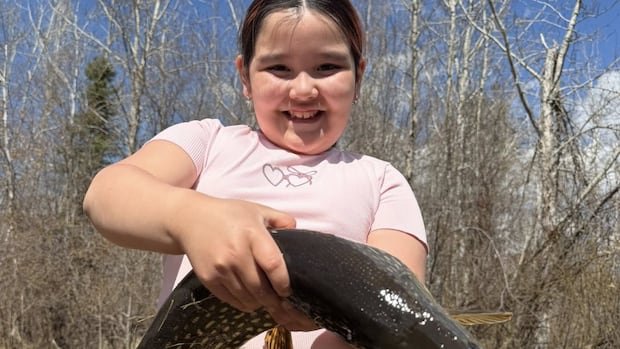

A Saskatchewan First Nation is incorporating a unique approach to educate its students about the environment. Clearwater River Dene Nation, located approximately 520 kilometers north of Saskatoon, has implemented a seasonal land-based learning strategy to enhance student engagement in educational activities.
Grade 11 student Landon Moise expressed enthusiasm for the opportunities provided by this model, such as interacting with scientists, conducting sampling activities, collaborating with NexGen in their future mining endeavors, and working alongside individuals they may not have interacted with otherwise. One of the focal points of their learning has been the traditional practice of snare fishing.
The technique involves crafting a snare at the end of a long branch, typically sourced from a flexible tree like poplar or birch. The length of the pole varies from four to 12 feet based on the location. Finding and catching the fish is a skill that requires a keen eye and precision, as described by Paul Haynes, the school’s land-based educator.
Following the challenges presented by the COVID-19 pandemic, the school faced low attendance rates and had to reassess its teaching methodologies. Transitioning from offering biannual camps, the school sought innovative ways to re-engage students who were experiencing heightened anxieties and apathy towards education post-pandemic.
The new approach has revitalized student interest, with individuals like Landon now finding value in attending school and recognizing the practical relevance of their learning experiences. The school pairs older students with younger ones to provide mentorship and ensure safety during outdoor activities.
Snare fishing serves as a bridge between traditional and scientific knowledge, allowing students to learn about fish biology, ethical handling practices, and conservation principles. Lessons on exercising hunting and fishing rights ethically are integrated into the curriculum, emphasizing the responsible distribution of the caught fish among families.
The program also involves the active participation of elders, referred to as “hama” or grandmother by the students, who impart valuable traditional knowledge and skills. The elders, including Doreen Louise Moise and Pauline Fontaine, teach the children how to clean and prepare the fish they catch, ensuring that every part is utilized efficiently.
The intergenerational collaboration and hands-on learning approach have not only preserved cultural practices but also instilled a sense of pride and accomplishment among the students. By combining Indigenous teachings with modern scientific principles, Clearwater River Dene Nation is nurturing a holistic and impactful learning environment for its students.