
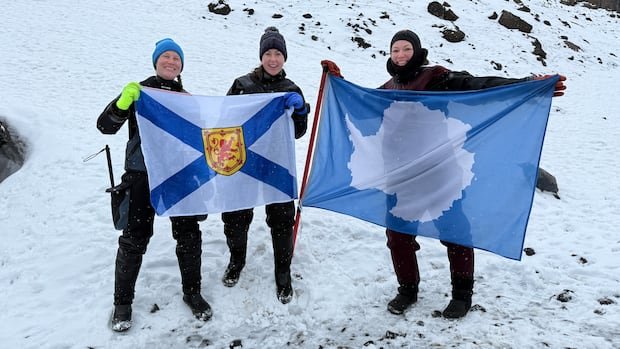

Katie MacIntosh’s lifelong dream of exploring Antarctica took an unexpected turn when she discovered her wetsuit was leaking during her first snorkeling attempt from a zodiac to the continent. Despite the physical discomfort, MacIntosh, along with two other geoscientists from Nova Scotia, embarked on a month-long research expedition to Antarctica, where they were part of a group of 24 women studying the impacts of climate change.
During the expedition, the team engaged in scuba diving and snorkeling activities to collect underwater data, including observing leopard seals, examining whale bones, and mapping glaciers. The scientists, hailing from Nova Scotia, also showcased their maritime roots by deploying robotic equipment from a zodiac while playing traditional Maritime tunes.
Heather Pearce, a geoscientist consultant, shared her experience of scuba diving near glaciers to study benthic marine life, expressing the profound impact the journey had on her. Denise Brushett, specializing in mapping and originally from the Lake Ainslie area, was awestruck by the sights of Antarctica, particularly the dramatic changes caused by melting ice, such as newly formed lagoons and fresh ridges.
Brushett emphasized the importance of spreading awareness about climate change based on their observations during the expedition. The team plans to analyze the collected data over the next year and engage with schools to educate others about the effects of climate change.
The expedition, led by Sea Women Expeditions, highlighted the significant contributions of Nova Scotia in the field of ocean science, with MacIntosh reflecting on the unique opportunity to conduct scientific research in such remote and challenging environments. The team’s dedication to their work and their home province was evident as they ventured into the depths of Antarctica, making remarkable discoveries while representing Nova Scotia’s expertise in marine science.