
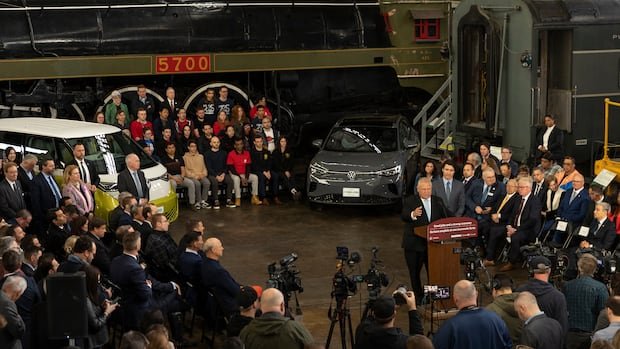

Ontario’s ambitious plans for establishing a complete electric vehicle supply chain are facing challenges as manufacturers postpone or scrap projects. To sustain this vision, the government is now shifting focus towards the demand for alternative types of batteries.
Initially, Premier Doug Ford and the federal government had negotiated to attract three electric vehicle battery plants to Ontario, with investments worth billions of dollars. The plan aimed to integrate these batteries into electric vehicles manufactured in the province, using parts sourced locally and minerals extracted and processed within Ontario.
However, several setbacks have dampened these early aspirations. Honda delayed its EV battery plant and electric vehicle assembly in Alliston due to reduced market demand. Umicore halted its plans for a cathode plant in eastern Ontario, and General Motors ceased production of its BrightDrop electric delivery van in Ingersoll. Additionally, Ford postponed the production of electric vehicles in Oakville in favor of gas-powered pickup trucks from its F-Series line.
The Ontario government is concerned about the potential impact of a new trade agreement between Canada and China, which could lessen the tariffs on Chinese EVs, potentially posing a threat to the local auto industry. Despite this, some experts argue that increased access to affordable Chinese EVs could stimulate demand for electric vehicles in general and benefit the domestic industry in the long term.
While global demand for electric vehicles is on the rise, uncertainties surrounding rebates, federal mandates on EV sales, and trade agreements with the U.S. are affecting the Canadian market. Stellantis is adapting to these shifts by repurposing its NextStar Energy facility in Windsor, originally intended for EV battery production, to manufacture batteries for energy storage purposes.
According to NextStar CEO Danies Lee, although the demand for electric vehicles may return, there is currently a market for batteries used in storage and other applications like AI-powered devices. This strategic pivot by Stellantis has been supported by Economic Development Minister Vic Fedeli, who emphasized the importance of maintaining an end-to-end EV supply chain, even if it involves a different final product for the time being.
The government’s approach is focused on attracting companies to establish manufacturing facilities in Ontario without intervening in the market. Fedeli stressed the significance of job creation, stating that the type of product being produced is secondary to the economic benefits generated.
Looking ahead, experts anticipate a resurgence in demand for electric vehicles in North America in line with global trends. While the capacity for EV production may not be fully utilized in the next five years, opportunities in battery and stationary storage technologies are seen as viable alternatives to capitalize on existing investments.
In conclusion, the evolution of the electric vehicle industry in Ontario is prompting a strategic shift towards battery storage technologies. This transition presents a significant opportunity for the province to diversify its manufacturing base and cater to the increasing demand for energy storage solutions in the long term.