
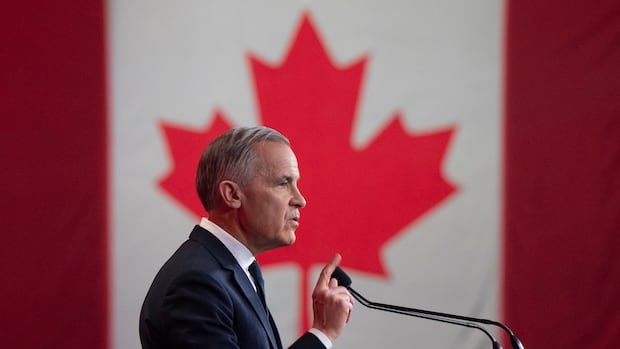

In Canada’s history, 24 prime ministers have held office, with only 13 previously leading their party to a House of Commons majority. Mark Carney has now become the 14th to achieve this feat, marking a significant milestone in his political journey.
Carney’s path to becoming prime minister was unconventional, as he entered the Liberal leadership race 16 months ago when the party was facing a significant deficit in the polls. Despite his lack of prior elected office experience, his leadership skills, honed during his tenure as governor of two central banks, propelled him to success.
His journey culminated in a unique majority in Parliament, forged through a combination of byelections and floor-crossings. Described by an unnamed Liberal as an “anti-Trump coalition,” Carney’s majority reflects a diverse political landscape under his leadership.
With this newfound majority, the Liberals are poised to streamline legislative processes and navigate confidence votes with ease. However, the party may seek to bolster its majority further to ensure stability amidst potential parliamentary shifts.
As the Liberals expand their political reach and influence, questions arise about their ability to maintain unity and effectively govern with a majority. Carney’s leadership will be tested as he navigates the challenges and opportunities that come with holding power.
While a majority government offers the Liberals a platform for action, they must tread carefully to avoid accusations of overreach. Opposition parties, led by Conservative Leader Pierre Poilievre, are poised to scrutinize the government’s decisions and hold them accountable for their actions.
Looking ahead, Carney and the Liberals face the dual risks of complacency and overzealousness. Balancing proactive governance with public sentiment will be crucial in maintaining support and delivering on their promises.
The implications of Carney’s majority extend beyond the Liberal Party, affecting the dynamics of parliamentary opposition and setting the stage for a potentially transformative political landscape. As parties realign and adapt to the new majority, the future of Canadian politics hangs in the balance.