
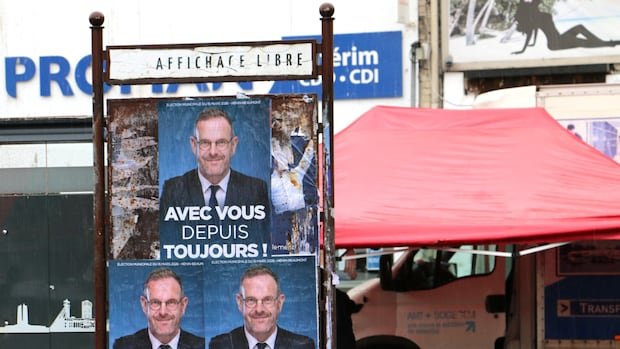

In the town of Hénin-Beaumont, surrounded by coal waste mounds from the past mining era, the streets were quiet one rainy morning in mid-March. The outdoor market had few visitors, with sellers outnumbering customers.
Rachid displayed his cleaning products near Mayor Steeve Briois’ campaign posters, while Joe, a farmer, sold vegetables from his orange tractor, praising Briois for reviving the town after its financial struggles.
Briois, a prominent figure in the National Rally party and ally of Marine Le Pen, is seeking a third term as mayor. Despite past controversies, including legal issues related to discriminatory statements, Briois has focused on local governance and community engagement.
The city center of Hénin-Beaumont appears well-maintained, but local candidate Houari Benhadja criticized neglect in certain areas, pointing out abandoned buildings and inadequate public services.
The recent mayoral election saw Briois re-elected with a significant majority, reflecting a broader trend of far-right success in municipal elections across France. The National Rally’s increasing influence poses challenges to mainstream parties, as voters express dissatisfaction with traditional politics.
The party’s transformation from the far-right fringe to a mainstream contender has been led by Marine Le Pen, with a focus on grassroots mobilization and electoral gains. However, concerns remain over the party’s associations with extremist elements and its ability to govern effectively at the national level.
Local opposition to the National Rally persists in some areas, particularly in larger cities with diverse populations. Despite the party’s electoral victories, critics highlight ongoing issues with extremism and questionable candidate vetting processes.
In Hénin-Beaumont and Villers-Cotterêts, residents weigh local improvements against national political narratives, emphasizing the importance of individual leadership and community initiatives. The far-right’s appeal in smaller towns underscores socioeconomic challenges and the need for inclusive governance.
As the National Rally expands its presence in local governments, scrutiny over its policies and candidates intensifies. The party’s success in smaller municipalities contrasts with its struggles in major cities, raising questions about its ability to lead on a national scale.